You Seek Medical Attention After Gallbladder Surgery?
Contact a healthcare professional if you experience persistent digestive symptoms
that are affecting everyday life.
Seek prompt medical attention for symptoms such as:
severe or worsening abdominal pain
persistent vomiting
fever or chills
yellowing of the skin or eyes
dark urine
unusually pale stools
significant abdominal swelling
inability to eat or drink normally
These symptoms can indicate complications that require assessment.
Most People Live Normally Without a Gallbladder
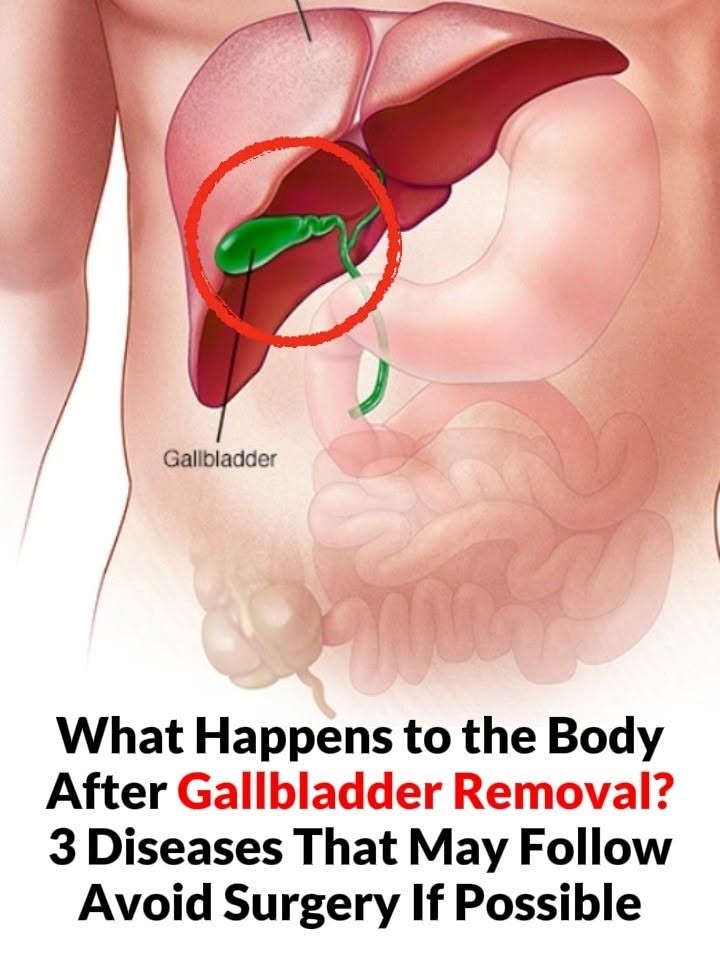
Gallbladder removal does change how bile reaches the intestine, but the gallbladder is not essential for survival.
The liver continues producing bile, digestion continues, and most people are eventually able to eat a normal diet and return to their usual activities.
Some patients develop diarrhea, digestive discomfort, or other biliary symptoms, but these problems often have treatments available.
The Bottom Line
Gallbladder removal does not inevitably lead to three diseases, nor is avoiding